













Fire sprinkler installations are too often scheduled last and blamed first when tenant improvement projects run behind. A familiar story repeats: the sprinkler contractor does not see the ceiling plan until permits are submitted, the HVAC layout consumes the available plenum, and everyone waits on revised sprinkler drawings before the ceiling can close. Meanwhile, occupancy dates slip, the tenant is frustrated, and scheduling blame circulates.
This pattern exists because sprinkler work is treated as a downstream trade, planned after major design decisions are already locked in. In reality, sprinkler installation planning needs to move upstream if you want predictable schedules and smooth turnovers on tenant build-outs in Nashville and the surrounding markets.
Why sprinkler planning needs to start before design is locked in
Most trades can adapt to design decisions that were made without their input. The fire sprinkler system cannot. By the time the ceiling grid, HVAC layout, and partition walls are finalized, the space left for sprinkler piping and heads is already dictated.
If your sprinkler contractor was not part of those conversations, they inherit constraints they did not create and cannot easily fix in the field—often at premium cost and with schedule impact.
How ceiling and partition layouts shape head placement
Suspended ceiling grids do more than define aesthetics; they define where sprinkler heads can and cannot go. NFPA 13 has specific rules for head spacing, deflector position, and coverage geometry around high/low ceiling transitions, soffits, and open plenum conditions.
When ceiling design is completed before a sprinkler contractor reviews it, you frequently end up reworking either the ceiling or the sprinkler layout, adding cost and delay. Once the ceiling contractor has mobilized, their sequence is fixed; if overhead piping is not complete before the grid goes in, something will slip in your schedule.
Early coordination between ceiling design and sprinkler layout is the simplest way to avoid these conflicts.
What your sprinkler contractor needs from day one
Early engagement with your fire sprinkler contractor is straightforward, but it has to happen before schematic design is finalized. From the outset, your contractor should have:
- Occupancy classification for the tenant space
- Ceiling heights across all areas
- Hazard classification and anticipated occupant load
- Data on whether the existing system main can support additional zones
- A clear understanding of how the tenant will actually use the space (office, light manufacturing, restaurant, etc.)
A change in use—for example, converting office space to light manufacturing or a commercial kitchen—can completely change the fire sprinkler system design requirements. Schedule a sprinkler planning conversation before schematic design is complete, not after permits have already gone in for review.
Understanding the Scope of a TI Fire Sprinkler Installation
No two tenant build-outs have the same sprinkler scope, and confusing one scenario for another is how budgets and timelines get derailed. Typical conditions include:
- Minor layout updates: A handful of head relocations to accommodate new partitions
- Zone extensions: Added branch lines from an existing main, with hydraulic checks to confirm capacity
- Full redesigns: New system layouts required due to occupancy classification changes or non-compliant existing coverage
Each scenario carries different lead times, permitting expectations, and cost drivers. Knowing which situation applies—before you publish the project schedule—is essential.
Modifying an Existing System vs. Installing New
Moving existing sprinkler heads to new locations is typically the least disruptive option. The main piping network remains largely intact while head locations are adjusted to match the new layout; this still requires permits and inspections, but with relatively predictable cost and time.
Zone extensions are more involved. New branch lines are added from the existing main, and your contractor must confirm that available water supply and system capacity can handle the additional demand.
Where tenant areas lack coverage entirely, or where new occupancy classifications make the current system non-compliant, a full new system installation becomes necessary. Each path has a different impact on budget, schedule, and approvals.
Sprinkler Zone Design and Layout Planning
During design, your fire protection contractor will:
- Define sprinkler zones within the tenant space
- Complete hydraulic calculations
- Produce full drawing sets and submit them to the Authority Having Jurisdiction (AHJ) for review
Zone design determines how the system is divided, which areas are fed from which supply branches, where control valves and flow switches are located, and how the layout integrates with the ceiling plan without leaving gaps in coverage. Getting zone layout right on paper is significantly more cost-effective than correcting it in the field.
Plan Review Timelines and AHJ Requirements
Jurisdictions vary widely in how long they take to review and approve sprinkler plans. Some cities can turn around permits in about five business days; others take four to six weeks for a first review cycle and may require additional revision rounds.
If your construction calendar does not account for the AHJ’s review and revision timelines, you will encounter schedule gaps exactly when you can least afford them. Many jurisdictions publish specific tenant improvement guidance that outlines TI sprinkler expectations under NFPA 13, consolidating requirements into a single resource.
Submit early. Late permit submittals rarely work in your favor.
Rough-In vs. Final Installation Milestones
Field work occurs in two main phases for TI sprinkler projects:
- Rough-in: Installing piping above the ceiling prior to closure
- Final trim: Installing sprinkler heads, cover plates, and performing system testing after ceilings are complete
Both phases must align with the overall construction schedule. Rough-in must be completed and inspected before the ceiling contractor starts, and final trim cannot occur until ceilings are finished. Missing either handoff compresses the schedule in ways that are difficult and expensive to correct.
Coordinating Sprinkler Work With Other Trades
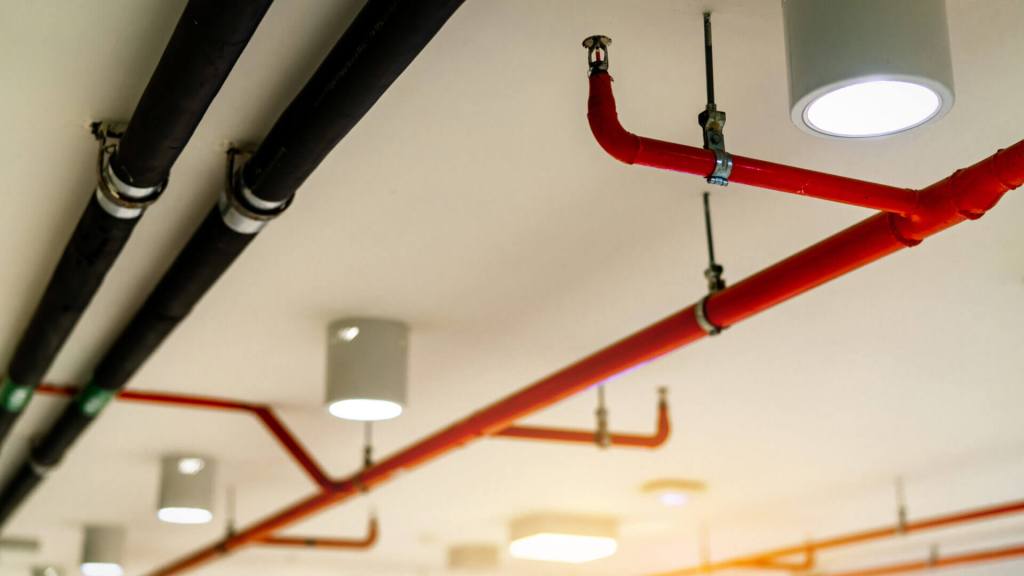
The ceiling plenum is the most constrained real estate on a tenant improvement job. HVAC ductwork, sprinkler piping, electrical conduit, cable trays, structural framing, and fire alarm devices all compete for the same space.
If conflicts between trades are not resolved before installation, they will be solved in the field—with added cost and time. Early coordination is essential for predictable, on-time TI projects.
Why the Ceiling Sequence Drives the Schedule
The ceiling grid installation is the last overhead activity and effectively locks in your sequence. Before grid installation, HVAC rough, electrical rough, and sprinkler rough all must be complete and inspected.
Your sprinkler contractor should attend any preconstruction meeting that involves the ceiling sequence. If they are not in that room, you will hear about conflicts in the field instead of addressing them on paper where they are cheaper to fix.
Resolving Conflicts With HVAC and Mechanical Trades
Effective coordination with mechanical trades does more than prevent clashes; it can simplify mechanical scope. In certain configurations, a properly designed and coordinated sprinkler system can eliminate the need for fire dampers in HVAC ducts that penetrate one-hour fire barriers, reducing complexity and cost for the mechanical contractor.
Electrical and Low-Voltage Interference Points
The ceiling plenum also carries electrical conduit, low-voltage cable trays, fire alarm devices, and sprinkler piping. A clear protocol keeps everyone productive:
- All overhead trades review the layout together before installation begins
- Routing zones are agreed upon so trades are not fighting for the same pathways
- A predefined process exists for resolving conflicts when they arise
Identify who owns that arbitration conversation before mobilization—not after crews are onsite.
Phasing Sprinkler Installation to Match Build-Out Milestones
If fire sprinkler installation is not phased to match the overall build-out, pressure will mount on every subsequent step. Inspections can stall, other trades can be left waiting on approvals, and occupancy dates can shift.
Phasing itself is not complicated, but it must be agreed upon before demolition and construction begin so that each milestone aligns with real-world trade availability and AHJ requirements.
Pre-Construction Planning Checklist
Before anyone starts demolition or overhead work, confirm these items:
- Existing fire sprinkler system capacity can support the planned scope
- Ceiling designs are finalized enough to allow coordinated layouts
- Permit applications are prepared and submitted as early as the design allows
- A preconstruction coordination meeting is scheduled with all overhead trades to define sequence and sign-off criteria for each phase
This one-time planning step prevents repetitive rework and reduces surprises during construction.
Rough-In Timing vs. Other Overhead Trades
On typical TI jobs, the sequence follows this pattern: demolition, then HVAC, electrical, and sprinkler rough-in working in the overhead space at roughly the same time. That overlap makes the earlier coordination meeting critical.
Before ceilings close, sign-off requirements are non-negotiable: rough-in inspection completed, hydrostatic test passed, and AHJ approval in place. If any of these items lag when the ceiling contractor is ready, the project schedule will absorb the impact.
Final Trim, Testing, and Inspection Sign-Off
Once ceilings are complete, final sprinkler trim proceeds: heads and cover plates are installed, and system testing is scheduled. Flow tests and AHJ inspections should be booked in advance, not at the last minute.
After approval, as-built drawings are submitted to close out the project. Delaying final inspection can push the certificate of occupancy by weeks, even when all other trades are complete. Common verification issues at this stage can delay occupancy; understanding typical deficiencies and corrective actions upfront helps avoid last-minute surprises.
The Bottom Line on Tenant Build-Out Sprinkler Planning
You do not plan around sprinklers as an afterthought in a tenant build-out—you plan for this critical life safety trade from the start. The earlier fire sprinkler design is integrated into the tenant improvement process, the fewer budget and schedule shocks you will encounter.
The core steps are straightforward: involve your sprinkler contractor during schematic design, align installation with ceiling milestones, resolve trade conflicts before mobilization, and submit permits as soon as design is ready. None of these elements are complicated—they simply require a clear owner and the right sequence.
Guardian Fire Services applies this level of planning and coordination to every tenant improvement sprinkler project we deliver. If your tenant build-out in the Nashville region or beyond needs disciplined fire sprinkler planning, the right time to start the conversation is before your design is set in stone.
Contact us to schedule a site assessment or call us to discuss the specifics of your tenant improvement project before your schedule is locked in.