










How to Find Qualified Fire Sprinkler Installation Near Me
Searching for “fire sprinkler system installation near me” is the right first move when a commercial property needs reliable fire protection. But search results alone are not enough. Map listings, contractor websites, and trade directories often surface companies that rank well online without the local permit history to back it up.
Run several search variations — “sprinkler installers near me,” “fire protection contractors near me,” and “sprinkler company near me” — then merge those results into a single candidate list. Cross-reference each company against your local building department’s permit records and ask for project references from similar-scope work in your jurisdiction. That one extra step filters out companies that look credible online but lack the documented track record your project requires.
Quick Reference: How to Choose the Right Local Fire Protection Company
- Search with multiple keyword variations and cross-check results against local permit records — not just star ratings.
- Verify state/city contractor licenses, NICET certifications or factory approvals, and current certificates of insurance before any site visit.
- Select the correct system type — wet pipe, dry pipe, pre-action, or deluge — based on your building’s occupancy classification and specific hazard conditions.
- Request itemized written estimates from at least three qualified local fire sprinkler companies and tie payment milestones to objective project sign-offs.
How to Start Your Local Sprinkler Company Search
Begin your search online, but treat those results as a starting point rather than a shortlist. After running your initial queries, verify each candidate in two places: your state or city contractor licensing portal and your local building department’s permit logs.
Online reviews highlight patterns, but permit history and completed project documentation prove real-world experience. Ask every company for at least two local references from jobs comparable in size and occupancy to yours — then follow up by phone. Ask those references specifically about scope adherence, timeline accuracy, and how the contractor handled problems when they arose
Run your initial screening call in under five minutes. Confirm:
- Active license in your jurisdiction (get the license number)
- Recent, comparable fire sprinkler installation experience
- Willingness to pull permits and attend inspections
- Ability to provide a detailed, itemized written proposal
What Credentials, Licenses, and Insurance to Require
Before accepting any proposal from a local fire sprinkler installer, require the following documentation in writing:
| Credential | What to Verify |
|---|---|
| State or city contractor license | Active status + license number on file |
| NICET certification | Level and individual name for designers and techs |
| Certificate of Insurance (COI) | General liability + workers’ comp; verify effective dates directly with the carrier |
| Performance bond | Required by some jurisdictions and project owners |
| Factory authorization letters | Brand-specific; affects warranty validity and service options |
| Engineer of record | Required for stamped drawings where your AHJ mandates them |
Do not rely on copies alone. Look up license numbers on the issuing board’s website and call the insurance carrier directly to confirm coverage dates. Validate factory authorizations through manufacturer representative contacts or official dealer portals. Maintain a single credential file for each bidder throughout the vetting and selection process.
What Types of Fire Sprinkler Systems Are Available — and Which One Is Right for Your Property?
Wet Pipe Systems
Water is held in the pipes under pressure and discharges immediately when a sprinkler head activates. Wet pipe systems are the most common choice for occupied commercial spaces because they are fast, reliable, and cost-effective to install and maintain.
Dry Pipe Systems
Pressurized air occupies the pipes instead of water. When a head activates, the valve releases water into the piping. Dry pipe systems are the correct choice for cold attics, unheated parking structures, and warehouses where freezing is a real risk.
Pre-Action Systems
Water does not enter the pipes until a separate detection event occurs, adding an intentional layer of control before discharge. Pre-action systems are frequently specified for data centers, archives, museums, and other environments where an accidental discharge would cause serious secondary damage.
Deluge Systems
Open sprinkler heads allow water to discharge simultaneously across all heads when the control valve opens. Deluge systems are designed for high-hazard environments — chemical processing facilities, aircraft hangars, and similar occupancies — where immediate high-volume suppression is required.
Your system selection directly affects engineering complexity, material costs, inspection frequency, and overall project timeline. When requesting bids, either specify your preferred system type or ask each contractor to recommend one with separate itemized pricing for each option.
What Is a Realistic Timeline for Fire Sprinkler Installation?
Every fire sprinkler project — from a small tenant improvement to a full new commercial installation — moves through the same core milestones:
Final inspection and certificate of completion
Site survey and existing system assessment
System design and hydraulic calculations
Permit submission and AHJ review
Material procurement (order long-lead items early)
Rough-in installation and overhead coordination
Hydrostatic pressure testing
Realistic timeframes by project scale:
Small residential installations: a few days to two weeks after permit approval
Mid-size commercial tenant improvements: three to six weeks from survey to final sign-off
Complex jobs with water supply upgrades or slow AHJ review cycles: schedule accordingly with built-in float
The three most common causes of schedule delay are predictable — and preventable:
- Permitting lag: Submit permit applications as soon as design drawings are complete. Follow up with the AHJ weekly.
- Water supply issues: Confirm municipal water capacity or plan for a fire pump or water main upgrade before locking in bids.
- Trade coordination failures: Overhead rough-in sequencing between HVAC, electrical, and sprinkler must be agreed upon before mobilization — not resolved in the field.
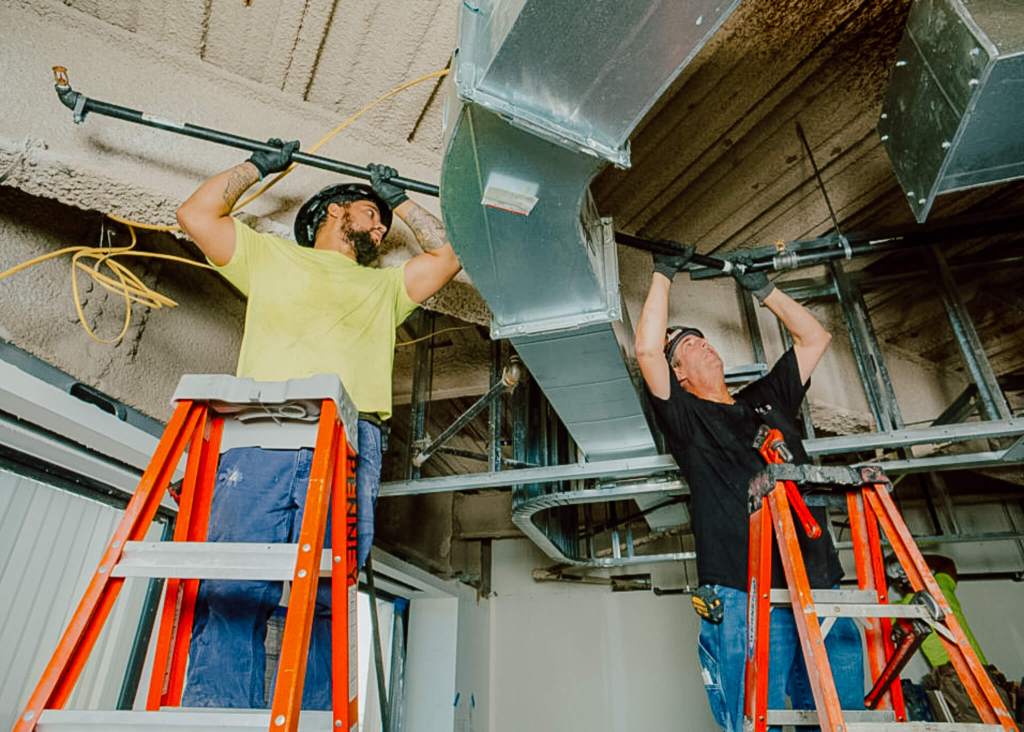
On installation day, expect hanger placement, pipe routing, head installation, and hydrostatic testing. Final acceptance includes a fire marshal walk-through, as-built drawing submission, and certificate of completion. Prepare a concise punch list in advance so minor corrections do not delay final sign-off.
How to Get Accurate Quotes from Local Fire Sprinkler Companies
A well-structured Request for Proposal (RFP) makes bids comparable and exposes omissions before they become change orders. Every RFP for a fire sprinkler installation should include:
- Site address, floor plans or photographs, occupancy classification, and preferred system type
- Water supply data: static pressure, flow test results, and hydrant distance
- Permit deadline requirements and AHJ contact information
- Full scope definition: design, hydraulic calculations, permitting, installation, testing, and commissioning
- Required certifications, insurance minimums, and payment milestone structure
Red flags in any proposal:
- No license number or proof of insurance provided
- Quote delivered by text or as a single-line number with no itemization
- Large upfront deposit required before design or permits are filed
- Vague or absent language about permit responsibility and inspection attendance
- No reference contacts offered
Your contract should define scope, timeline, change-order process, permit duties, inspection acceptance criteria, warranty terms for parts and labor, and lien waiver requirements. Tie all payment milestones to objective project events — design approval, rough-in completion, and final acceptance — not calendar dates.
Why Local Expertise Matters in Fire Protection
Fire protection compliance is jurisdiction-specific. Permit timelines, AHJ relationships, and local water supply conditions vary significantly across any specific region.
Working with a fire sprinkler company that has an established permit history with your local building department and fire marshal office reduces review friction and minimizes surprises. A contractor who works regularly in your municipality knows what the AHJ expects, which matters when your occupancy date is fixed.
Frequently Asked Questions: Fire Protection Services Near Me
Q: How do I verify that a fire sprinkler company is licensed to work in my city?
Check your state contractor licensing board’s online portal and confirm the license is active and in good standing.
Q: How long does it take to get a fire sprinkler permit?
Permit review timelines vary by jurisdiction and project scope. Simple tenant improvements may receive approval within five to ten business days; larger or more complex projects may require four to six weeks for initial review, with additional time for revision cycles.
Q: What is the difference between a wet pipe and dry pipe sprinkler system?
Wet pipe systems hold water in the pipes at all times and discharge immediately when a head activates—making them the standard choice for occupied, climate-controlled commercial spaces. Dry pipe systems hold pressurized air in the pipes and are used where freezing temperatures make water-filled pipes impractical.
How Do I Get Accurate Quotes and Choose the Right Installer?
A concise, well‑structured RFP makes it much easier to compare bids from local fire sprinkler companies and spot omissions. Define the scope clearly so every bidder prices the same assumptions and provides detailed, itemized costs. At a minimum, your RFP should include:
Site address, floor plans or photos, and desired system type
Water supply details, including static pressure, flow test results, and hydrant distance, plus any permit
Final Thoughts: How to Find the Best “Fire Sprinkler System Installation Near Me”
When you search for “fire sprinkler system installation near me,” focus on the fundamentals: proper licensing, adequate insurance, and choosing the right system for your building’s occupancy and hazards. Two practical takeaways stand out:
- Verify credentials and select a system that truly fits your space and use.
- Use strong documentation to avoid surprises during permitting, installation, and commissioning.
From here, your next steps are straightforward: run your search, narrow the list to three qualified installers, and ask each for a written scope, a copy of their license, and an insurance certificate before authorizing any work. Then schedule a site survey with a reputable local contractor to confirm system type and receive a transparent, itemized estimate. If you would like help, contact Guardian Fire Services to request a site evaluation and a clear, comparable proposal you can confidently put beside other bids.