













Every October, the National Fire Protection Association sponsors Fire Prevention Week, the longest-running public health observance in the country. This year it runs October 4 through 10. The theme is “Charge into Fire Safety: Safe Charging Is a Superpower.” For the second year in a row, NFPA has built the campaign around lithium-ion battery fires.
Most of the messaging around this theme is aimed at homeowners: don’t overload an outlet, don’t charge a device under a pillow, unplug things when the battery is full. This is good advice, but it only tells part of the story. Commercial and industrial properties are dealing with a version of this problem that’s a lot bigger than a phone charger.
Where the risk actually shows up in a commercial setting
Lithium-ion batteries have become part of daily operations across a lot of industries. Warehouses now store fleets of e-bikes and electric scooters. Facilities run electric forklifts, power tools, and cleaning equipment off rechargeable battery packs. In addition, office buildings and multi-tenant properties are adding EV charging stations in parking garages. Data centers rely on battery backup systems to keep servers running during an outage. Each of these is a legitimate business need. Still, each one introduces a fire risk that most buildings weren’t originally designed to handle.
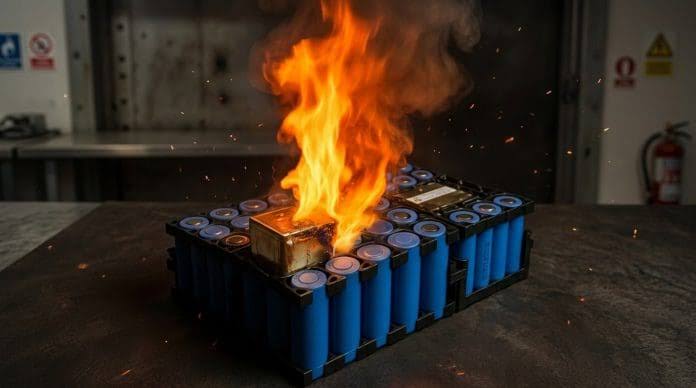
The problem isn’t just that lithium-ion batteries can catch fire. It’s how they burn. A damaged or overheated battery can go into thermal runaway, a chain reaction that produces intense heat, toxic gas, and a fire that’s difficult to extinguish with a standard water-based system. Furthermore, these fires can also reignite hours after they appear to be out, which is part of why they catch facility managers off guard.
What this means for property owners and facility managers
Fire Prevention Week is a good prompt to take a closer look at how battery-related risk is actually being managed on a property. Rather than assuming a general fire protection plan already covers it, consider reviewing your approach. A few questions are worth asking:
Are charging stations for e-bikes, scooters, or other battery-powered equipment located away from exits and combustible storage? Is there enough space around them for heat to dissipate safely?
Does the facility’s detection system account for the specific signs of a battery fire, which can develop and spread faster than a typical structure fire?
Is the suppression system appropriate for the materials being stored and charged in that space? Not every fire suppression setup is designed to handle a lithium-ion battery fire effectively.
Has staff been trained on what to do if a battery starts smoking, swelling, or overheating before it becomes an active fire?
These aren’t questions with a one-size-fits-all answer. The right setup depends on the building, what’s being stored, and how the space is used day to day.
Where Guardian fits in
This is exactly the kind of assessment Guardian’s partner companies handle regularly. They evaluate detection and suppression coverage for a new charging area. In addition, they update a fire safety plan to reflect equipment a building didn’t have five years ago. Or they simply walk a facility manager through what NFPA’s current guidance actually means for their property. Guardian combines a national network with technicians who know the local codes and the buildings in their own communities. This matters when the standards around battery storage and charging keep evolving as fast as the technology does.
If Fire Prevention Week has you rethinking how your property handles battery-powered equipment, now is a good time to have that conversation with your local Guardian partner.