










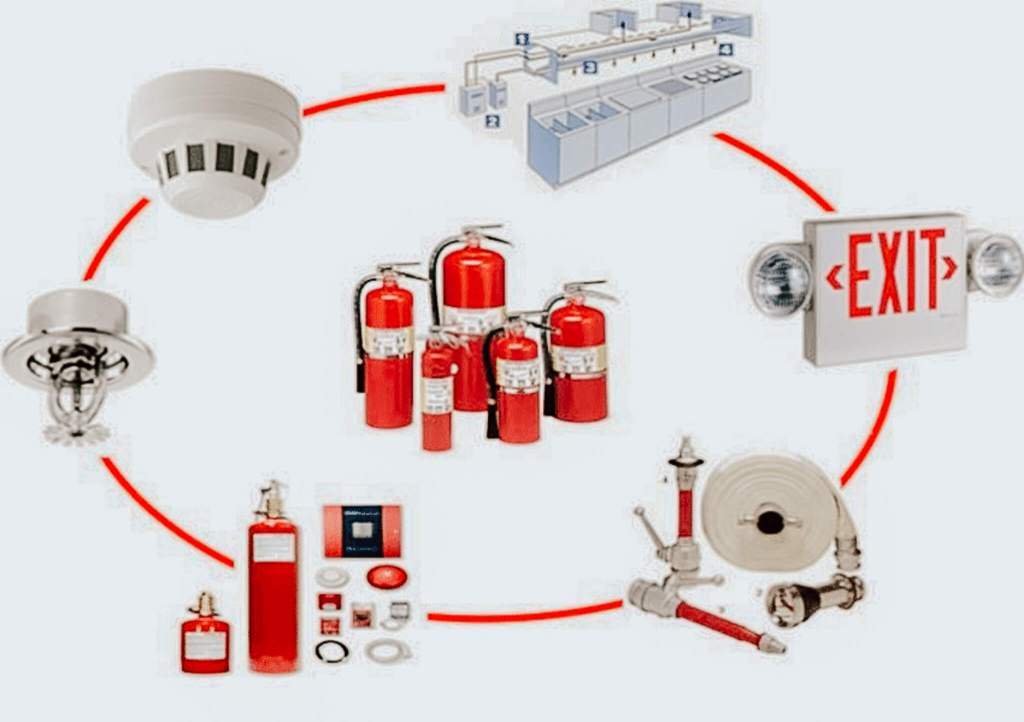
NFPA 4, the Standard for Integrated Fire Protection and Life Safety System Testing, is all about making sure your fire and life safety systems actually work together when it counts. Instead of testing sprinklers, alarms, smoke control, elevators, and emergency power in isolation, NFPA 4 focuses on whether they communicate and sequence properly during a real event. As a result, people, property, and critical operations are better protected.
Here’s a simple breakdown of the basics.
1. What NFPA 4 Actually Covers
NFPA 4 applies when two or more fire protection or life safety systems are integrated, meaning one system’s signal triggers an action in another system (for example, an alarm event initiating starting smoke control or releasing doors). Additionally, it lays out how to plan and conduct integrated testing, who is responsible, what scenarios to test, and how to document results. Consequently, owners and AHJs can verify that the overall safety strategy really works.
2. When NFPA 4 Is Required
NFPA 4 is typically referred to on new construction, major renovations, or system upgrades where multiple systems now interact. For instance, tying a new fire alarm into existing HVAC smoke control or connecting a generator to multiple life safety loads may be required. Moreover, many jurisdictions are increasingly referencing NFPA 4 in their adopted fire and building codes. This means integrated testing is becoming a formal requirement before occupancy.
3. Why Project Managers Should Care
Integrated testing under NFPA 4 directly affects schedules, turnover, and inspections. A coordinated NFPA 4 plan helps project managers avoid last‑minute delays with the AHJ. Furthermore, it reduces finger‑pointing between trades and turns system turnover into a predictable, documented process instead of a scramble at the end of the job.
4. Why Fire Protection Professionals Should Care
For fire protection engineers, sprinkler contractors, and alarm integrators, NFPA 4 is an opportunity to lead the conversation on performance, not just hardware. The standard emphasizes cause‑and‑effect matrices, sequences of operation, and testable design. It therefore rewards teams that understand how systems should respond from first detection through final action. Also, it formalizes cross‑trade collaboration with mechanical, electrical, elevator, and door vendors. As a result, coordination becomes a defined part of the job instead of an informal afterthought.
5. What Integrated Testing Looks Like in Practice
An NFPA 4 integrated test is built around realistic scenarios, such as a smoke detector activating in a corridor or a sprinkler opening in a storage room—and then verifying every expected response step‑by‑step. That might include alarm notification, elevator recall, door releases, smoke control fan operation, fire pump start, and emergency power transfer. All responses are witnessed and documented so everyone can see that the building responds exactly as designed.
How Guardian Supports NFPA 4 Compliance
Guardian helps building owners and project teams turn NFPA 4 from a code citation into a clear plan. Our teams support the development of the integrated testing plan and coordinate with all involved trades. We also lead or witness tests so you can demonstrate to the AHJ, and to your organization that the building’s fire and life safety systems operate together as a reliable, integrated whole.