







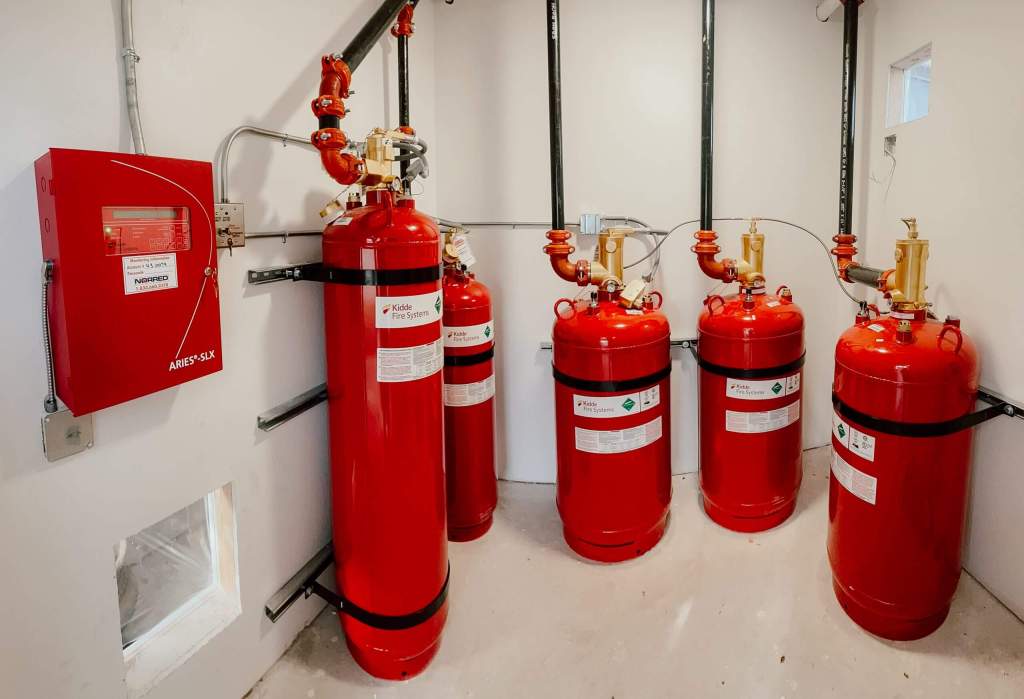
Hybrid fire suppression systems attack a fire on two fronts at once: heat and oxygen.
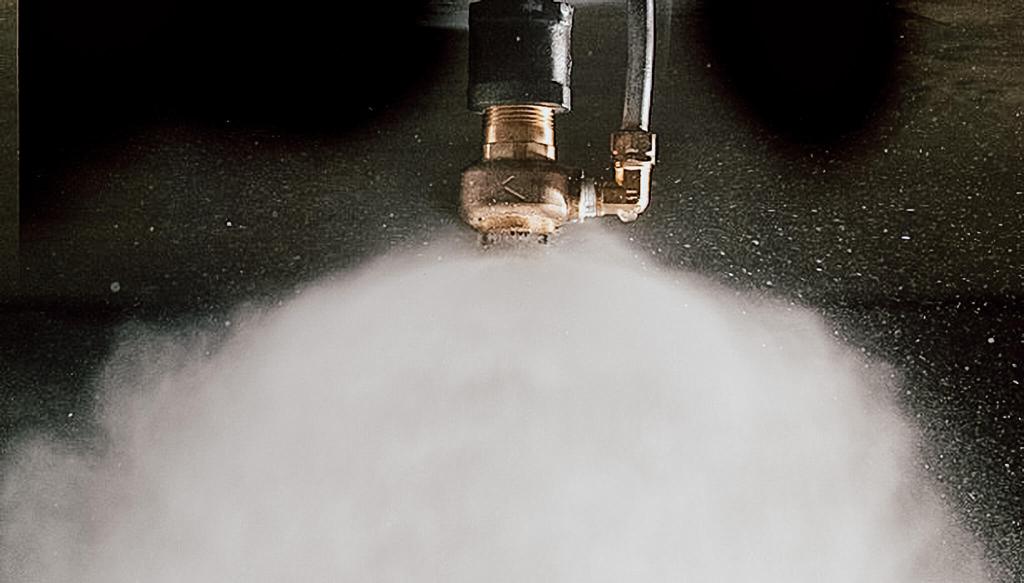
Water mist nozzles release extremely fine droplets that absorb heat and cool the fire. Meanwhile, the resulting steam helps push oxygen away from the flame zone.
An inert gas (typically nitrogen) is discharged with the mist to lower the oxygen concentration just enough to stop combustion. However, this does not make the space unsafe for brief human exposure in many applications.
Because droplets are so small, the system uses significantly less water than traditional sprinklers. Therefore, this can reduce water damage and cleanup time after a discharge.
The Standard Behind Hybrid Systems: NFPA 770
NFPA created a dedicated standard—NFPA 770, Standard on Hybrid (Water and Inert Gas) Fire-Extinguishing Systems—to cover this technology.
NFPA 770 provides minimum requirements for:
· System design and hydraulic calculations
· Application testing and design validation
· Installation and commissioning
· Ongoing inspection, testing, and maintenance
Before NFPA 770, hybrid systems fell between NFPA 750 (water mist) and NFPA 2001 (clean agents). So, adding this standard brought clarity to owners, engineers, and AHJs.
Key Types of Hybrid Fire Suppression
Most hybrid systems fall into a few main categories. However, all are built around the same core idea: water mist plus an inert gas.
1. Nitrogen + Water Mist Systems
These are the most common hybrid systems on the market.
· Use nitrogen as the driving and inerting gas, paired with ultra-fine water droplets.
· Often delivered through a single emitter or nozzle assembly that mixes the media at discharge.
· Designed for Class A, B, and C hazards when listed for those applications.
An example is the Victaulic Vortex system, which uses nitrogen and water droplets smaller than white blood cells to absorb heat and reduce oxygen.
2. Hybrid Mist Systems with Separate Piping
Some hybrid designs use separate piping networks for gas and water that mix at or near the discharge point.
· Water mist lines deliver fine droplets under controlled pressure.
· Inert gas lines deliver nitrogen or another gas that mixes in the nozzle or discharge zone.
This approach can improve coverage in larger or more complex spaces while still keeping water usage low.
3. Hybrid Systems Using Other Gases or Clean Agents
While nitrogen-water combinations are the most common, some hybrid concepts combine water mist with other gaseous or chemical agents (such as FK‑5‑1‑12). This helps meet specific performance or environmental goals.
· Water mist provides rapid cooling and some oxygen displacement.
Any such system must be designed and listed in accordance with NFPA 770 and applicable product listings.
Where Hybrid Fire Suppression Works Best
Hybrid systems shine in environments where you need fast suppression, limited water use, and protection of critical assets.
Typical applications include:
· Data centers and server rooms, where you must protect electronics but still manage significant heat loads.
· Power generation and turbine enclosures, where traditional sprinklers might not respond quickly enough or may cause damage.
· Industrial machinery spaces, paint lines, or processing equipment with mixed Class A and B hazards.
· Museums, archives, and cultural properties with both sensitive contents and structural fire loads.
In many of these spaces, hybrid systems can be used as primary protection or as supplemental protection alongside sprinklers. The choice depends on the hazard and listing.
Advantages of Hybrid Fire Suppression
Hybrid fire suppression systems offer several important benefits compared to conventional solutions.
· Lower water usage: Fine mist droplets provide high heat absorption with a fraction of the water used by traditional sprinklers. As a result, this reduces runoff and water damage.
· Effective in complex fires: The combination of rapid cooling and oxygen reduction helps deal with shielded or obstructed fires. This is useful because such fires might challenge single-agent systems.
· Asset-friendly protection: Hybrid systems are suitable around electronics, machinery, and high-value contents when properly designed and listed.
· Multi-class capability: When listed accordingly, they can protect Class A, B, and C hazards within the same overall system design.
For owners, that means better protection with less collateral damage, especially in high-value or mission-critical environments.
Design, Installation, and Maintenance Considerations
Because hybrid systems are more complex than traditional sprinklers, thoughtful design and ongoing care are critical.
Key considerations include:
· Early coordination: Involve fire protection engineers, AHJs, and insurers early to confirm that a hybrid system is appropriate. This also helps ensure it meets NFPA 770 and local requirements.
· Specialized design: Nozzle layout, droplet size, gas concentration, and enclosure integrity must be validated against test data and manufacturer listings.
· Integrated detection and controls: Hybrid systems rely on fast, reliable detection and releasing controls to deliver agent quickly and safely.
· Regular inspection and testing: NFPA 770 outlines inspection, testing, and maintenance requirements to keep the system ready over its full life cycle.
Working with experienced designers and installers who understand both NFPA 770 and the specific product line is essential.
Final Thoughts
Hybrid fire suppression systems fill an important gap between traditional sprinklers, water mist, and clean agent systems. By combining fine water mist with inert gas, they deliver rapid, efficient fire control while helping protect sensitive equipment and valuable assets. For facilities balancing life safety, asset protection, and downtime risk, hybrid systems are an option worth serious consideration.