






In today’s diverse fire protection landscape, fire suppression and special hazard systems play a critical role in safeguarding environments where traditional sprinklers and water-based systems fall short. From data centers and power plants to museums and marine applications, these systems deliver precision, speed, and reliability. They suppress fires across specialized environments worldwide.
Exploring Special Hazard Fire Suppression Method
Each special hazard system uses a distinct extinguishing medium designed for specific risks, materials, and operational environments. Selecting the right system depends on the type of asset being protected. It also relies on the nature of potential hazards, and whether suppression must occur in occupied spaces.
Clean Agent Systems
Clean agent systems such as FM-200 and Novec 1230 work quickly to interrupt combustion through heat absorption and chemical reaction suppression. These systems leave no residue, require no cleanup, and are non-conductive. This makes them ideal for data centers, server rooms, medical imaging suites, and museums where sensitive electronics and materials are present. For example, the use of Novec 1230 in global financial data centers ensures fire suppression occurs in under 10 seconds. It protects critical infrastructure without damaging multi-million-dollar equipment.
CO₂ Systems
Carbon dioxide systems suppress fires by displacing oxygen, rapidly suffocating flames within seconds. They are particularly effective in industrial facilities, power generation rooms, and marine vessels. These are places where equipment operates in confined or unoccupied environments. While powerful and residue-free, CO₂ systems are used only where human exposure is limited, as oxygen displacement poses health risks. Many international manufacturing facilities rely on CO₂ to protect conveyor systems and electrical panels. In doing so, they minimize downtime and maintain production continuity.
Aerosol Systems (Stat-X)
Stat-X aerosol systems use condensed aerosol technology to interrupt the chemical chain reaction of a fire. Compact and efficient, these systems offer fast deployment without the need for complex piping. Each Stat-X unit disperses ultra-fine potassium-based particles that absorb heat and halt combustion at a molecular level. Globally, Stat-X is used in mining, transportation, and energy production. It offers a portable and environmentally friendly alternative to traditional gas or foam solutions.
Pre-Action Foam Systems
Foam-based systems remain the backbone of protection for environments dealing with flammable liquids, such as aircraft hangars, refineries, and chemical plants. The foam smothers the fire by forming a barrier that prevents oxygen from reaching the fuel surface. Pre-action systems add a layer of verification through heat or smoke detection before discharge. This reduces false activations. In global aviation facilities, high-expansion foam systems protect jet hangars, saving millions in repair costs after incidents involving jet fuel fires.
Inert Gas Systems
Inert gas systems, such as Inergen or Argonite, use natural gases like nitrogen, argon, and CO₂ to lower oxygen concentration. This action extinguishes flames while remaining safe for people. These systems are extremely effective for occupied control rooms, archives, and telecommunication centers. In these settings, equipment and personnel must remain protected simultaneously. A European model of fire safety regulation now mandates inert gas protection in new cable infrastructure hubs. This is due to its environmental sustainability and safety for human-occupied environments.
Hybrid Systems
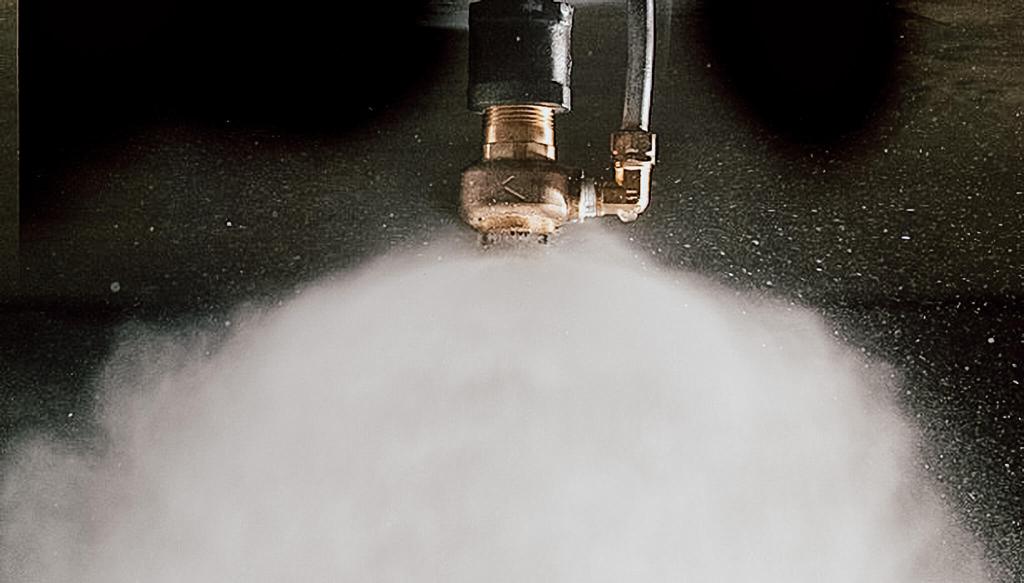
Hybrid suppression systems combine the cooling power of water mist with the oxygen displacement properties of inert gas. This dual-action method provides rapid heat absorption and re-ignition prevention with minimal water damage. As a result, hybrid systems are increasingly installed in telecom facilities, electric utility plants, and pharmaceutical cleanrooms where equipment sensitivity demands both precision and safety. Their adoption is growing globally. This is due to their low environmental footprint and versatile performance in high-risk industrial environments.
The Future of Fire Safety
As industries evolve and environmental standards strengthen, demand for sustainable and adaptive fire suppression continues to rise. Hybrid and special hazard systems represent the next generation of protection. They combine detection intelligence, rapid agent deployment, and eco-conscious extinguishing technologies. Whether through clean agents, hybrid mist systems, or aerosol suppression technology, these systems ensure critical operations remain protected under any condition. They preserve continuity, safety, and confidence across global industries.